 ultimate-guide
How to Choose the Right Hair Extensions for You
Quick Summary
The right hair extensions depend on your natural hair type, texture and density, followed by the attachment method that fits your routine. Clip-ins suit flexible, occasional wear, while tape-ins suit consistent all-day wear. Match color and length at the roots, mid-lengths and ends for a natural blend.
- Start by assessing your hair type, texture and density before choosing a product.
- Clip-ins take a few minutes at home and must be removed nightly.
- Tape-ins stay in for weeks and need repositioning every 6 to 8 weeks.
- Thin hair suits halo extensions best because they place no tension on your roots.
- Human hair tolerates heat styling and lasts longer; synthetic cannot take standard heat tools.
Table of Contents
- Start With Your Natural Hair: Type, Texture and Density
- Clip-In vs Tape-In Extensions: Which Method Fits Your Routine
- Best Hair Extensions for Thin Hair
- How to Match Hair Extensions to Your Hair
- Human Hair vs Synthetic: Fiber Choices and Quality Checks
- How Long Hair Extensions Last and What Affects Their Lifespan
- Choosing Your Extensions and Booking a Consultation With Luscious Lips & Locks 4U
- Frequently Asked Questions
Start With Your Natural Hair: Type, Texture and Density
Last Updated: October 28, 2026
Choosing the right hair extensions starts with your own hair, not the product catalog. Your natural hair type, texture and density are factors to consider when choosing extensions.
Start with three questions: your hair type (straight, wavy, curly or coily), your texture (fine, medium or coarse), and your density (how much hair you have per square inch of scalp).
Clip-In vs Tape-In Extensions: Which Method Fits Your Routine
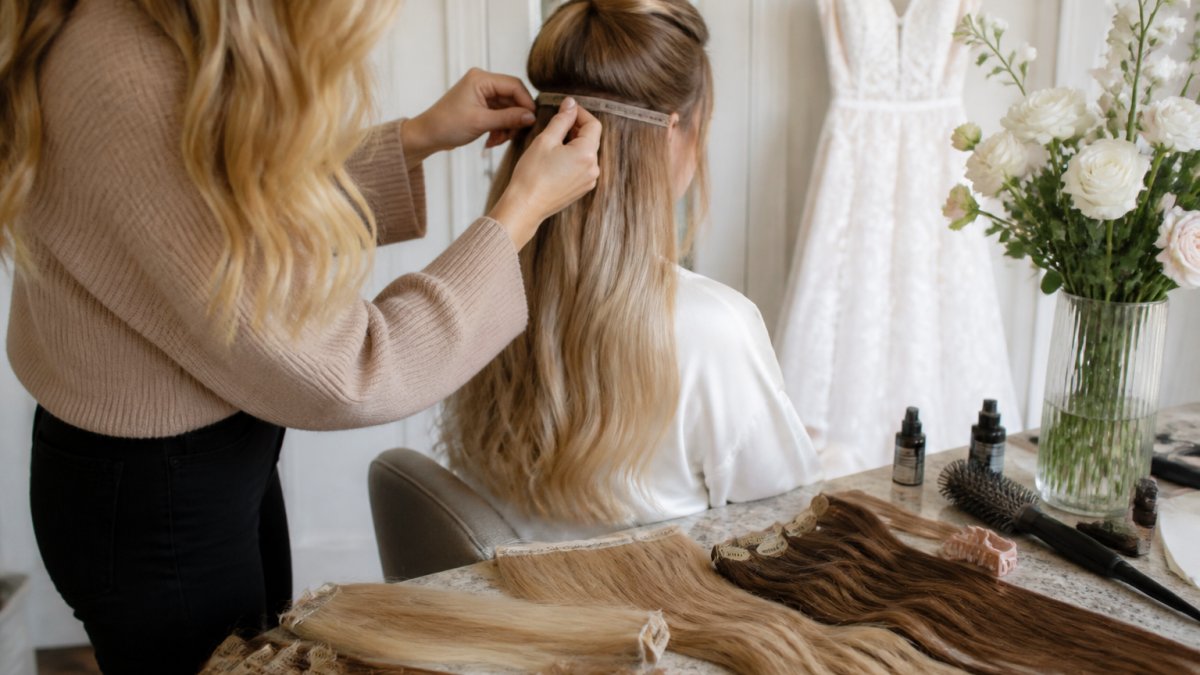
The main difference between clip-in and tape-in extensions is how often you want to wear them and how much time you want to spend installing them. Clip-ins are removable wefts you attach yourself at home in minutes.
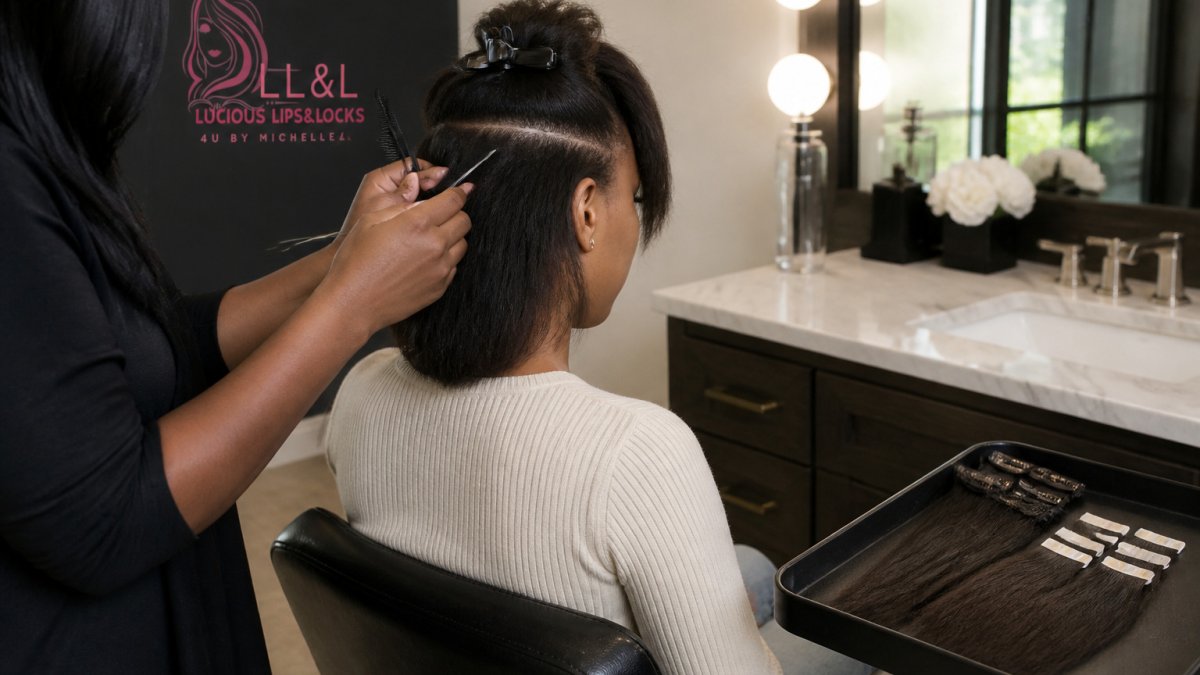
Clip-ins suit people who want flexibility: wear them for a special evening, take them out before bed, and skip them on days you prefer your natural hair.
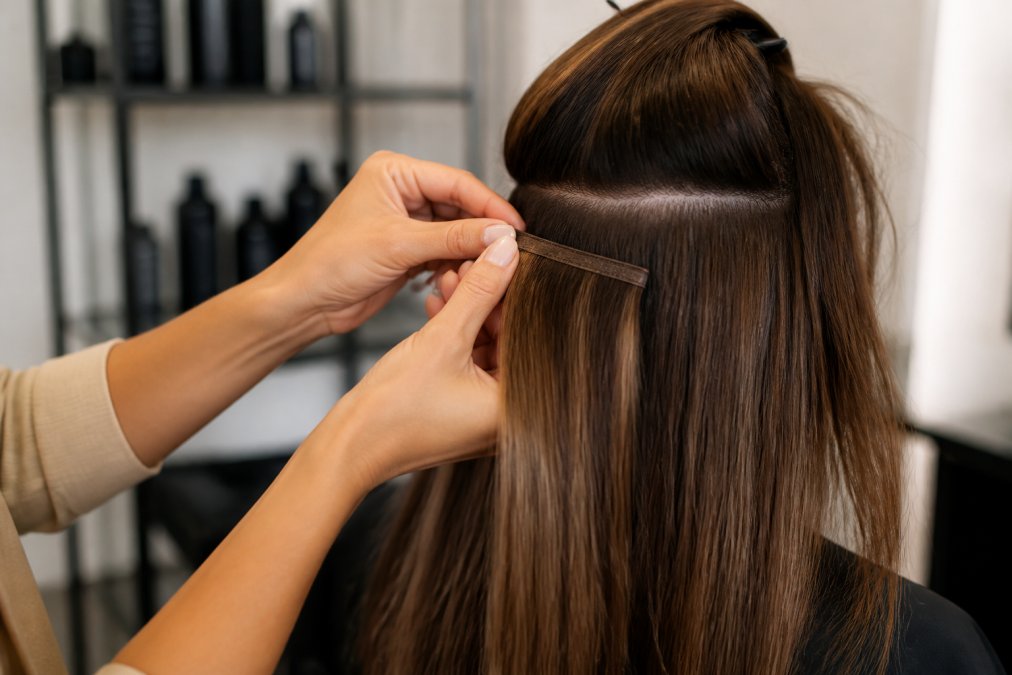
Tape-ins work better for people who want a seamless, all-day look without daily installation.
Here is a quick way to decide:
| Factor | Clip-In | Tape-In |
|---|---|---|
| Installation | At home, a few minutes | Salon visit, about an hour |
| Wear time | Daily or occasional | Continuous for weeks |
| Maintenance | Remove nightly | Reposition every 6 to 8 weeks |
| Best for | Flexible, occasional wear | Consistent, all-day wear |
To explore our range, see our luxury hair extensions collection.
Other Attachment Methods Worth Knowing
Clip-ins and tape-ins are the most common choices, but other methods exist. Sew-in or weft-based extensions are braided into cornrows and stitched in place for a secure hold on thicker hair. Micro-link or bead extensions attach small loops of hair to natural strands, working well for fine hair but requiring skilled installation to avoid tension. Halo extensions sit on the crown like a thin wire band, giving instant volume without adhesive or clips against the scalp.
Best Hair Extensions for Thin Hair
Thin hair is where extension choice matters most, because the margin between a natural-looking result and visible damage is narrow. The best extensions for thin hair are lightweight, fine-textured and attached with controlled, evenly distributed tension. Heavy wefts pull on fragile roots and cause traction damage over time, so check weight and attachment footprint first.
Rank Methods by Tension and Footprint
Not all methods stress thin hair equally. A practical ranking, from gentlest to most demanding:
- Halo extensions: No adhesive, clips or bonds against the scalp. A thin wire band sits on the crown, so there is no pull on your own roots at all. Best for occasional volume and special events.
- Clip-ins: Removable and tension is user-controlled, but clips concentrate pressure at the root. Choose clips with silicone or rubberized padding and never clip in the same spot two days running.
- Tape-ins: Low-profile and comfortable when installed correctly, but the adhesive bond holds a section of hair for weeks. Fine hair can tolerate tape-ins if the stylist uses narrow, lightweight wefts and avoids over-taping.
- Micro-link or bead extensions: Can suit fine hair because each strand is isolated, but poorly placed beads create point-loading that breaks fragile hair. This method demands a skilled installer.
- Sew-in and heavy weft methods: Generally the least suitable for low-density hair, since braided bases and stitched wefts add bulk and sustained tension.
Warning Signs to Watch For
- Tenderness or headaches at the attachment points, particularly in the first 48 hours
- Small white bulbs or broken strands on the pillow or in the brush
- Redness, bumps or flaking along the part line and hairline
- Extensions that feel tight when you turn your head or lie down
- Visible slippage or a gap between the bond and the scalp
Placement and Density Strategy
Color and density blending matter more on thin hair because gaps show quickly. Match your natural root tone, add a few strands in a slightly lighter or darker tone for dimension, and place wefts near the crown and hairline where fine hair looks sparsest.
Avoid over-applying: fewer, well-placed wefts look more natural than a dense application that overwhelms fine hair. Start conservatively and add more at your next visit.
Safe Wear Duration for Fragile Hair
Thin and fragile hair benefits from scheduled rest periods. Many practitioners recommend giving the scalp and roots a break between installations and rotating attachment points so the same strands are not loaded repeatedly.
How to Match Hair Extensions to Your Hair
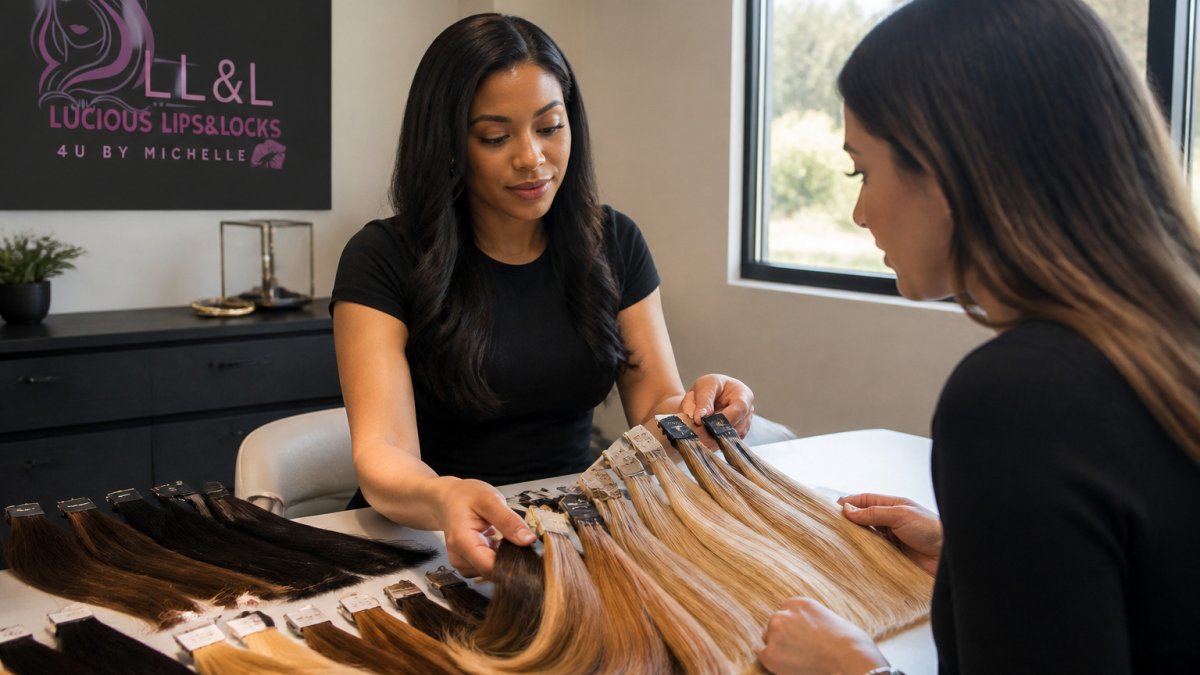
Matching extensions to your hair is a combination of color, texture and length. Hold the swatch next to your hair in natural daylight, not store lighting, and compare it at the roots, mid-lengths and ends, since your hair may shift in tone along its length.
Do not forget maintenance when matching: extensions that match your texture may still tangle if the fiber quality is low.
Human Hair vs Synthetic: Fiber Choices and Quality Checks
Human hair extensions are more versatile: you can heat-style them, color them and wear them longer with proper care, and they blend more naturally because they move and reflect light like your own hair.
When assessing quality, check the following before buying:
- Hair source: Look for clearly described human hair, and be cautious of vague labels.
- Cuticle alignment: Hair with cuticles running in one direction tangles less and lasts longer.
- Weft construction: Tight, well-sewn wefts shed less than loosely stitched ones.
- Return or satisfaction policy: A clear policy signals the seller stands behind the product.
Human hair is typically the better choice for regular wear, while synthetic can suit a single occasion. Ask what fiber is used and how it should be styled, and choose the option that fits how you actually plan to use it.
How Long Hair Extensions Last and What Affects Their Lifespan
Lifespan depends on the extension type, fiber quality and care. Clip-ins can last many months with regular use if stored properly and washed gently. Tape-ins are moved and reused, with wefts outlasting the bonds, which need replacing as your hair grows. Sew-in and micro-link extensions depend heavily on installation quality and aftercare.
Care Schedule by Method
A single care routine does not fit every method. Use this as a starting point and adjust with your stylist:
| Task | Clip-In | Tape-In | Sew-In / Micro-Link |
|---|---|---|---|
| Wash frequency | Every 6 to 10 wears | 1 to 2 times per week | 1 to 2 times per week |
| Drying | Air dry flat or on a hanger | Air dry; avoid heat at the bond | Air dry; keep braids or links dry |
| Brushing | Wide-tooth comb, ends upward | Soft brush, avoid the bond line | Loosen at the root, then comb down |
| Heat styling | Low to medium with protectant | Keep heat away from adhesive | Keep heat away from links |
| Sleep | Remove nightly | Loose braid or silk pillowcase | Loose braid or silk pillowcase |
| Salon visit | None required | Reposition every 6 to 8 weeks | Tighten or move up every 6 to 8 weeks |
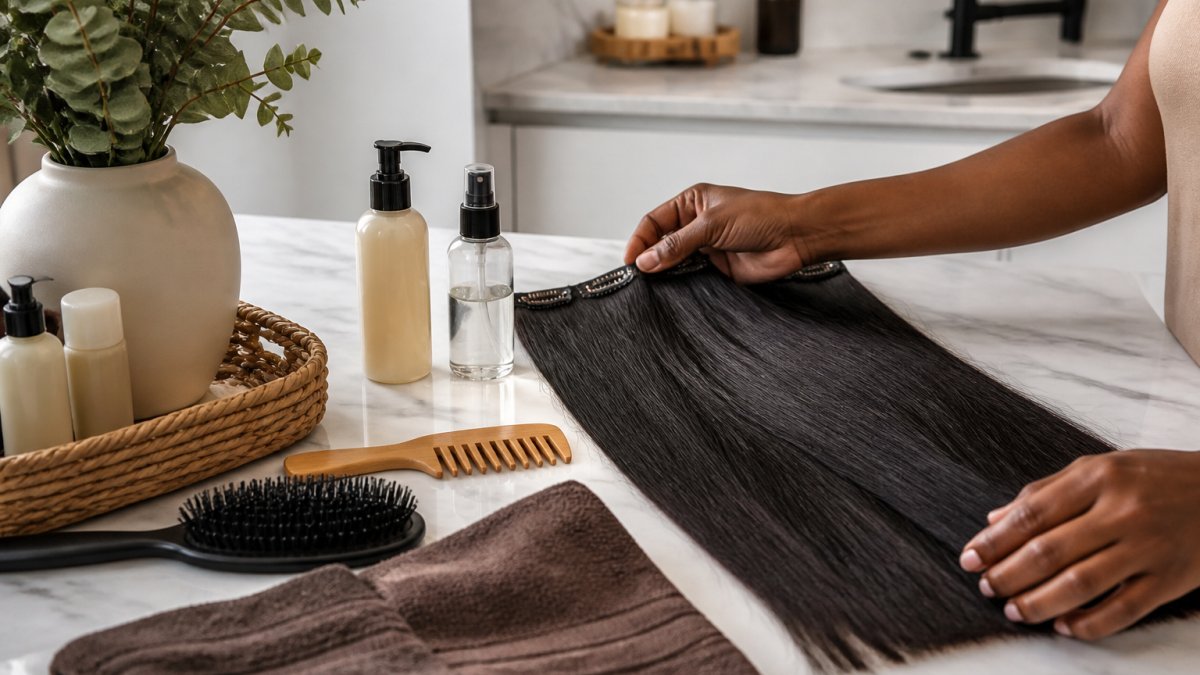
Several factors shorten lifespan. Heat styling without protection dries and damages fibers. Sleeping with wet extensions or brushing them harshly causes tangling. Oil-based products can loosen tape-in adhesive. Good habits extend life considerably: use a wide-tooth comb, detangle gently from the ends upward, and store clip-ins flat or on a hanger.
Care by Fiber
Human hair tolerates the same products as your own, though it benefits from sulfate-free shampoo and light conditioner on the mid-lengths and ends. Synthetic fiber cannot take standard heat tools and tangles more once the factory set relaxes, so use cool water, avoid heavy oils, and do not brush while wet.
Matting and tangling are the most common complaints, and usually preventable: wash with sulfate-free shampoo, condition the mid-lengths and ends only, and air dry where possible. For more, see our guide on preventing matting and fixes and our walkthrough on maintaining silky hair extensions.
Total Cost of Ownership
- Hair cost: The largest variable. Longer and denser sets cost more, and human hair costs more than synthetic.
- Installation: Clip-ins carry no salon installation cost; tape-ins, sew-ins and micro-links do.
- Maintenance: Tape-ins and sew-ins need repositioning every 6 to 8 weeks, which is a recurring cost.
- Replacement: Bonds and links are consumables; wefts may be reused several times.
- Removal: Adhesive and link methods usually require a professional removal, which is a separate charge.
Choosing Your Extensions and Booking a Consultation With Luscious Lips & Locks 4U
The right extensions depend on your hair type, density, texture, desired look and how you plan to wear them. Assess your natural hair, choose a method that fits your routine, match color, texture and length carefully, and pick a fiber that suits your styling habits and budget.
Luscious Lips & Locks 4U offers luxury-quality hair extensions that are silky soft and tangle free. Visit our website for current pricing.
Frequently Asked Questions
How do I choose the right hair extensions for my hair?
Start with three things about your natural hair: its texture (straight, wavy, curly or coily), its density (how much hair you have per section) and its thickness (the width of each strand). Fine or low-density hair usually does better with lightweight wefts or small tape-in pieces, because heavy extensions can cause tension and visible scalp. Thick hair can carry more weight and bulk. Match the extension's texture to your natural pattern, choose a color that blends at the root, and pick a method you can maintain on your schedule. A stylist consultation can confirm the right combination before you buy.
Which hair extension method is best for fine or thin hair?
For fine or thin hair, lightweight options generally work best. Tape-in extensions with thin, flat wefts and clip-in extensions with small, lightweight wefts put less stress on the hair than heavy sew-in or fusion methods. Avoid placing extensions too close to the scalp or in high-tension areas, which can cause breakage and traction stress. Choose fewer, thinner pieces placed carefully, and remove them on schedule so the natural hair stays healthy. Ask a stylist to assess your hair before committing to a method.
What is the difference between clip-in, tape-in and sew-in extensions?
Clip-in extensions attach with small metal clips to wefts you can remove yourself, so they suit occasional wear and special events. Tape-in extensions use thin adhesive strips that bond sections of extension hair to your natural hair and must be professionally applied and removed, typically lasting several weeks. Sew-in extensions are braided into cornrows and stitched with thread, offering a secure, long-term hold that works well for thick or textured hair but requires more care to avoid tension. Each method trades off between convenience, hold, scalp contact and upkeep.
How do I match hair extensions to my hair color and texture?
Hold the extension against your hair in natural daylight to compare shade, undertones and highlights. If you have balayage or dimension, consider a multi-tone set so the extensions blend rather than look flat. Texture matters as much as color: straight extensions on curly hair look unnatural, while a curl pattern that matches your own blends most easily. Many shoppers choose a shade slightly lighter or darker than the root to create a natural gradient. When in doubt, ask a stylist to blend the extensions with a sample section before you buy a full set.
How long do different types of hair extensions last?
Lifespan depends on the method, the fiber and how well the extensions are cared for. Clip-in extensions can last many months when removed and stored nightly and washed gently. Tape-in extensions are usually reapplied every six to eight weeks as the natural hair grows out. Sew-in and fusion extensions can stay in longer but need periodic maintenance to prevent slipping and matting. Human hair typically lasts longer than synthetic hair with proper care, and it can be styled with heat more often. Avoid heavy tension and sleeping with wet hair to extend the life of any type.