 ultimate-guide
How to Choose Hair Extensions for Weddings
Table of Contents
- Do You Actually Need Hair Extensions for Your Wedding?
- Understanding Hair Extension Types for Bridal Styling
- How to Match Hair Extensions to Your Hair Color
- Matching Texture and Curl Pattern to Your Natural Hair
- Best Hair Extensions for Wedding Updos and Styled Looks
- Planning Your Hair Extension Wedding Hair Trial
- Selecting Length, Weight, and Density for Your Desired Result
- Comfort, Security, and Wear Through Your Wedding Day
- Frequently Asked Questions
Last Updated: October 20, 2026
Do You Actually Need Hair Extensions for Your Wedding?
Hair extensions for weddings aren't a necessity, they're a strategic choice. Some brides have naturally thick, long hair that photographs beautifully as-is; others want to transform their look entirely. The real question is whether extensions solve a specific problem on your wedding day.
Most brides consider extensions for one of three reasons: adding length, creating volume that photographs well under bright lighting, or achieving a specific hairstyle that requires more hair than they have.
At Luscious Lips & Locks 4u by Michelle, we work with brides who understand that luxury extensions aren't about hiding what you have, they're about amplifying your best features. The silky soft, tangle-free quality of premium extensions means they integrate seamlessly with your natural hair.
The timeline matters. Extensions require consultation, color matching, and a full trial. Six weeks out you still have time, but barely; eight weeks gives you room to order, test, and adjust. Less than six weeks means working under pressure and risking last-minute problems.
Understanding Hair Extension Types for Bridal Styling
Hair extension types differ in application method, wear time, and styling flexibility. Your choice depends on your timeline, your commitment level, and the look you want.
Bridal Clip-In Hair Extensions: Speed and Flexibility
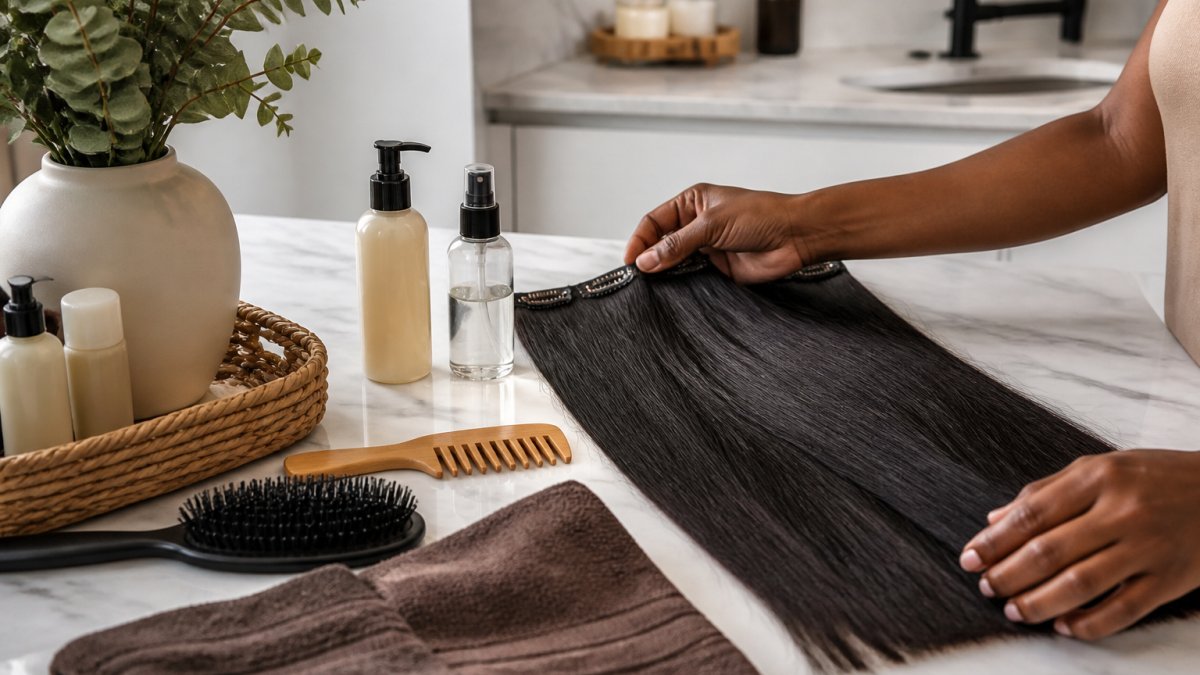
Clip-in extensions are the fastest option for weddings. You apply them the morning of your event, no appointment needed.
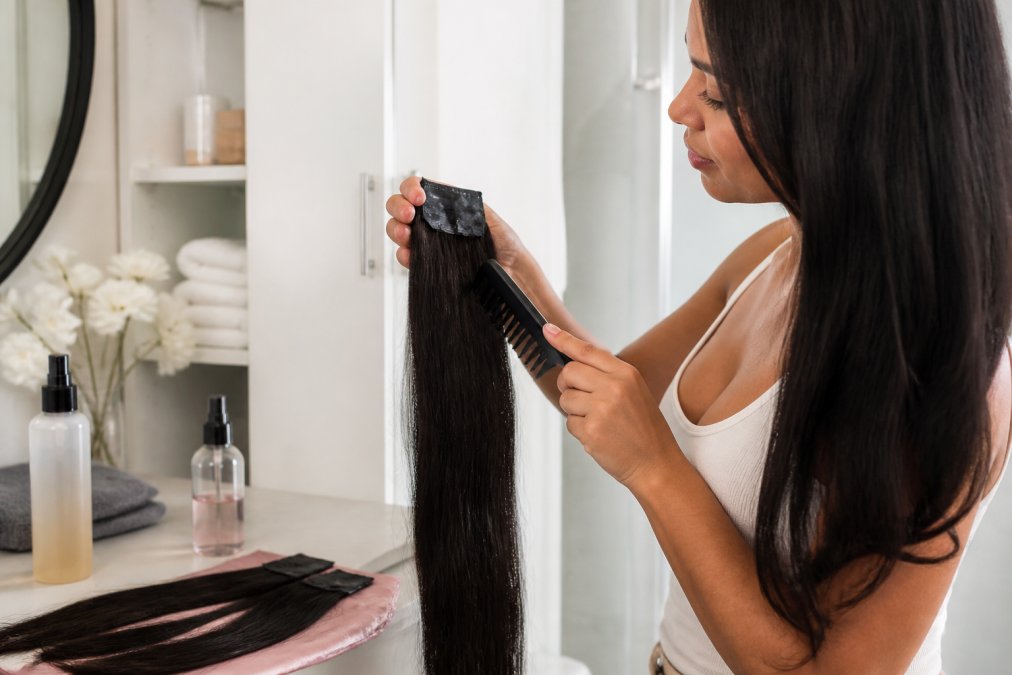
Clip-ins attach to small sections of natural hair using pressure-sensitive clips.
The trade-off: clip-ins require styling skill to blend seamlessly so the clips don't show, and careful removal after your wedding, since improper removal can cause breakage.
Semi-Permanent Options: Tape-In, Sew-In, and Bonded Extensions
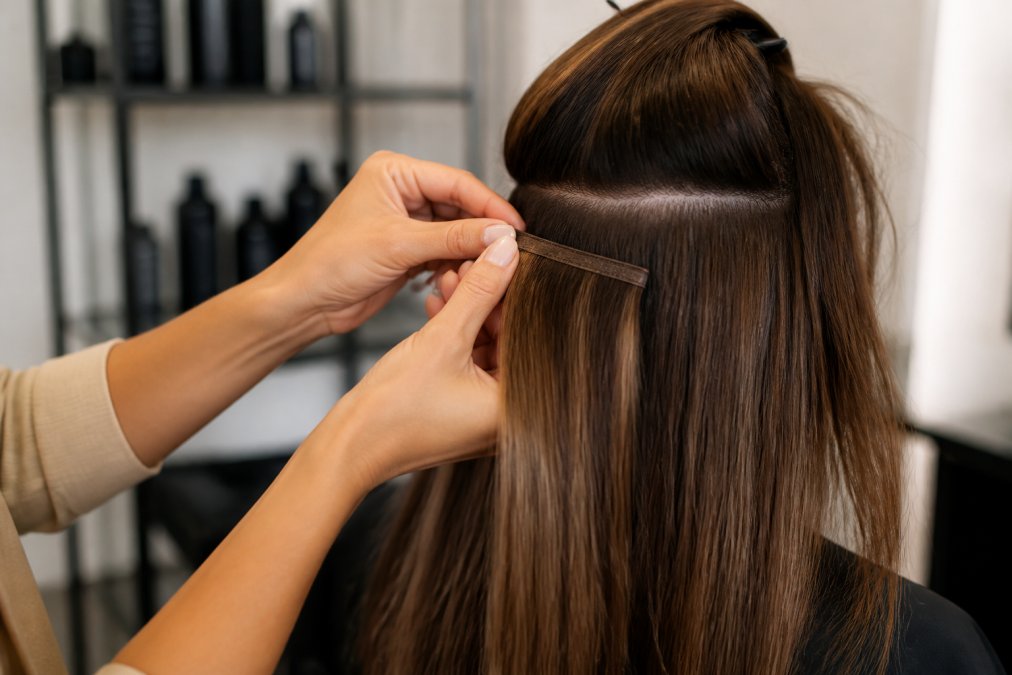
Tape-in extensions use adhesive strips to attach wefts to sections of natural hair. They last 6-8 weeks and require professional application and removal.
Sew-in extensions (also called weft or beaded extensions) are sewn onto braided sections of natural hair.
Bonded extensions (also called fusion or I-tip extensions) use a keratin adhesive to bond individual strands to natural hair. Application takes 3-5 hours.
All semi-permanent options require a removal or repositioning appointment after 6-12 weeks, so factor that into your post-wedding budget and timeline.
How to Match Hair Extensions to Your Hair Color
Color matching is where most brides encounter problems. Extensions that don't blend stand out in photographs, especially in bright wedding lighting. The goal is seamless integration the eye can't distinguish.
Identify your natural hair color accurately. Hair rarely has a single, uniform color, it typically has a base tone with highlights and lowlights.
Bring a swatch of natural hair to your consultation, cut from underneath where it won't be noticed. Professional color matching happens under natural daylight whenever possible, not fluorescent salon lights, which distort perception.
If your natural hair has dimension, ask about blended extension colors. Some premium lines offer multi-tonal options that mimic natural variation; a single-tone extension can look flat next to dimensional hair.
For bridal styling, remember your hair will be styled, lit professionally, and photographed. Slightly warmer tones photograph better under most wedding lighting, so if you're between two shades, choose the warmer one.
Matching Texture and Curl Pattern to Your Natural Hair
Texture matching is just as critical as color. Extensions with a different texture will never blend seamlessly, no matter how well the color matches. Straight extensions in curly hair look obviously fake; wavy extensions in straight hair create an awkward mixed texture.
Identify your natural texture first: straight, wavy, curly, or coily? Many people have naturally wavy hair but straighten it daily, which masks the true texture.
When ordering, match your natural texture exactly. If you have wavy hair, order wavy extensions, not straight ones you'll style into waves. Straight and wavy hair are processed differently and don't blend the same way.
Curl pattern is the specific shape of the wave or curl. Extensions come in loose wave, body wave, deep wave, and kinky curly, among others.
For wedding styling, consider how your hair will be worn. In an updo, texture matching is less critical than with hair down, but face-framing pieces and overall texture should still feel cohesive.
Best Hair Extensions for Wedding Updos and Styled Looks
Wedding updos require specific extension placement and weight distribution: the goal is thicker, fuller hair at the crown and sides without making the updo feel heavy or unstable.
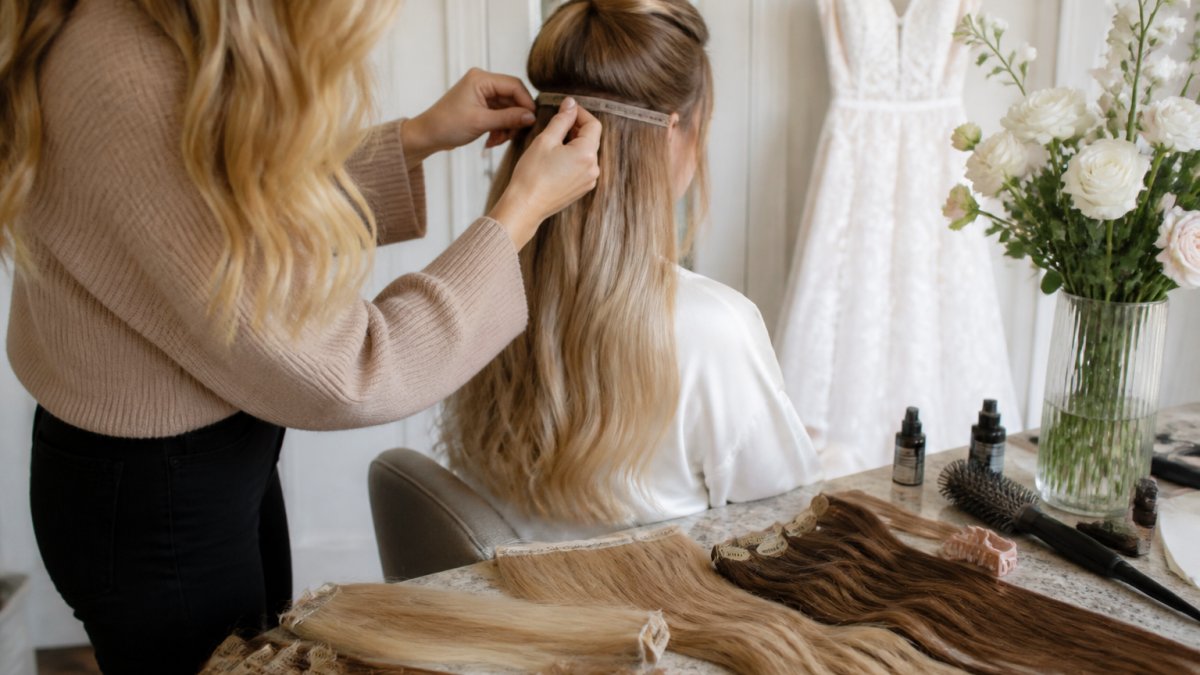
For clip-ins in an updo, position your fullest wefts at the crown and base, with smaller wefts along the sides and back.
Tape-in and sew-in extensions work beautifully for updos because they're permanently in place. No clips to show or shift during the ceremony, and your stylist can create any design without worrying about movement.
For down styles or cascading waves, extensions must blend seamlessly through the entire length, which usually requires a full head rather than partial placement.
Weight matters for updo stability. Heavier extensions can pull on your scalp all day; lighter sets (100-120 grams for a full head) are more comfortable.
Planning Your Hair Extension Wedding Hair Trial
A proper hair extension trial is non-negotiable. It's where you test whether the extensions work for your hair, your chosen style, and your comfort level.
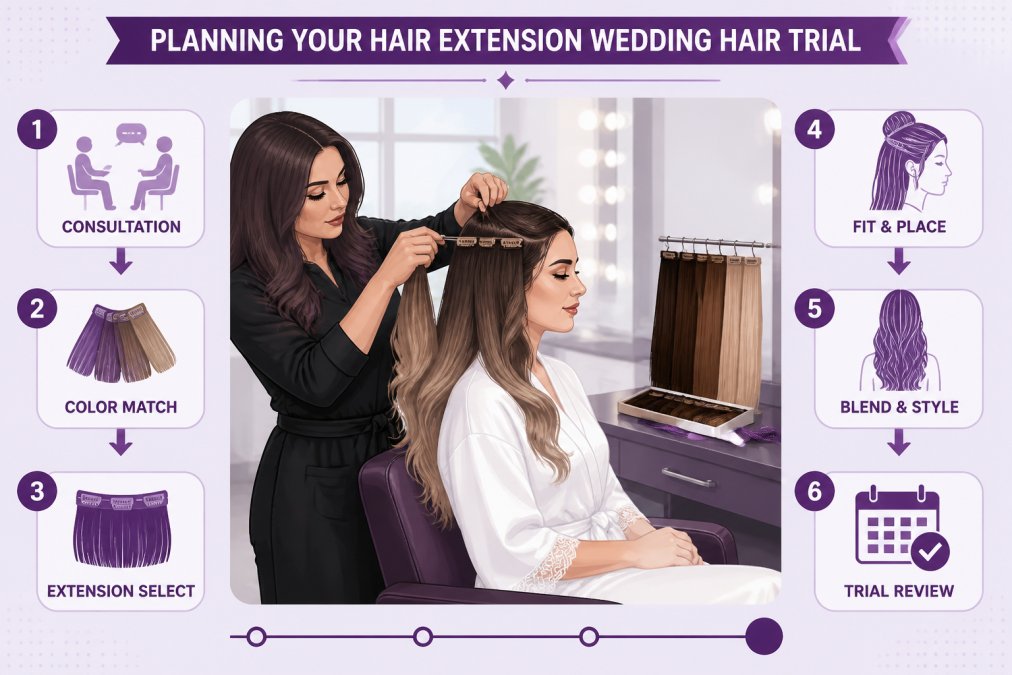
Schedule your trial 2-3 weeks before your wedding, leaving time to reorder extensions or adjust your styling plan.
Bring reference images of your desired bridal style: the shape of the updo, placement of face-framing pieces, overall volume and texture.
During the trial, wear the extensions for at least 4-6 hours, as long as you'll wear them on your wedding day.
Ask your stylist to photograph the trial from multiple angles: front, back, sides, and above, as a photographer might shoot it. These photos become your wedding-day reference and show how the extensions photograph under different lighting.
This is also when you assess color matching under natural daylight, salon lighting, and bright direct light. If the color doesn't match in the trial, you have time to reorder a different shade.
Selecting Length, Weight, and Density for Your Desired Result
Extension length is measured from the top of the weft to the ends. Most extensions range from 12 to 26 inches. For a wedding, consider your natural length and how much added length you actually need.
If your natural hair is shoulder-length and you want waist-length waves, you need extensions long enough to blend seamlessly. A 20-inch extension paired with shoulder-length hair creates the length you're after; 26-inch extensions on shoulder-length hair will look noticeably longer and unbalanced.
Weight is the total grams of hair in a set. A full head typically weighs 80-150 grams, depending on density and length.
Density is how many strands are packed into the weft. Low-density extensions create subtle fullness; high-density extensions create dramatic, obvious volume. For bridal styling, medium to high density photographs dramatically under studio lighting.
Test different weights and densities during your trial. The most comfortable set is the one you'll want for your wedding; over 12+ hours, comfort matters as much as aesthetics.
Comfort, Security, and Wear Through Your Wedding Day
Your wedding day is not the time to discover your extensions are uncomfortable. Discomfort shows in your face, and constant adjustment reads in photographs.
Clip-ins require secure placement and proper blending. During your trial, ask your stylist to show you how to secure them without damaging your hair.
For semi-permanent extensions, comfort depends on proper application. Tape-ins should sit about a quarter-inch from the scalp so they don't irritate skin.
Bring backup supplies: bobby pins, hair spray, and a small comb, so you can quickly secure a loosened clip or fix slippage instead of worrying through your ceremony.
Stay hydrated and avoid excessive heat exposure on your wedding day. Dehydration can affect how your scalp feels under extensions.
After your wedding, follow the care instructions for your specific extension type. Clip-ins should be gently removed and stored properly. Semi-permanent extensions require professional removal or repositioning.
Choosing hair extensions for your wedding comes down to understanding your specific needs, your timeline, and your comfort level. At Luscious Lips & Locks 4u by Michelle, we believe that luxury extensions should feel as good as they look, silky soft, tangle-free, and seamlessly integrated with your natural hair.
Frequently Asked Questions
Should I wear hair extensions for my wedding?
Hair extensions for weddings add volume, length, or both without damaging your natural hair during styling. If your natural hair is fine, thin, or shorter than your desired bridal look, extensions create the fuller, longer aesthetic many brides want. They also provide a safety net: if your stylist creates an updo or waves that don't hold, extensions add anchor points and body. However, if your natural hair already matches your vision and feels secure in your planned style, extensions are optional, not mandatory.
How far in advance should I order wedding hair extensions?
Order extensions 8-12 weeks before your wedding. This timeline allows time for color matching, texture testing, and a full styling trial with your stylist. If you're choosing clip-in extensions, you need less lead time (4-6 weeks) since application is faster. For semi-permanent options like tape-in or sew-in extensions, allow the full 8-12 weeks so your stylist can schedule application and removal around your wedding date without rushing.
Are clip-in extensions good for a wedding?
Bridal clip-in hair extensions are excellent for weddings because they apply in minutes, require no salon commitment, and allow you to test the full look with your stylist before the big day. Clip-ins work best if your natural hair has enough density to anchor them securely and if your planned style keeps clips hidden (updos, half-up styles, or loose waves). They're ideal for brides who want flexibility, fast application on wedding morning, and the ability to remove and reuse extensions afterward. If your hair is very fine or your style exposes the roots, semi-permanent options may feel more secure.
How do I make wedding hair extensions look natural?
Match extension color, texture, and curl pattern to your natural hair as closely as possible. Blend extensions throughout your hair rather than concentrating them in one area, your stylist should weave them in so no single section looks obviously thicker. Use human hair extensions, which blend and move more naturally than synthetic fibers. Have a full trial with your stylist weeks before the wedding so you can see how extensions integrate into your planned style, and request adjustments to placement or density if anything looks or feels off.
Can hair extensions hold curls all day at a wedding?
Human hair extensions hold curls well, especially if they're styled with heat and set with hairspray. Synthetic extensions hold curls better than human hair in some cases, but they don't blend as naturally. For all-day hold, ask your stylist to use a curling iron or hot rollers on extensions and apply a strong-hold hairspray designed for bridal styling. Clip-in extensions with wefts (the wider base sections) hold curls more securely than individual-strand extensions because the weight and anchor points are more stable.
What should I do with my wedding hair extensions after the wedding?
Human hair extensions can be worn again if cared for properly. Wash them in cool water with sulfate-free shampoo, condition thoroughly, air-dry flat, and store in a cool, dry place away from heat and sunlight. Clip-in extensions last 6-12 months with proper care; semi-permanent extensions can be reapplied if the bonds or wefts remain intact. Many brides reuse extensions for special events, everyday styling, or donate them. If extensions are damaged or matted beyond repair, check if your supplier offers recycling or disposal guidance.
How do I know if my natural hair can support clip-in extensions?
Clip-in extensions work best on hair with medium to thick density. If your hair is very fine, thin, or you have scalp sensitivity, the weight of clips may cause discomfort or slipping. A stylist can assess your hair during a consultation and recommend the number and placement of clips that feel secure without pulling. If your natural hair is sparse, semi-permanent extensions bonded directly to strands may distribute weight more evenly and feel more comfortable throughout your wedding day.
What's the difference between human and synthetic wedding hair extensions?
Human hair extensions blend seamlessly with natural hair, hold heat styling, and can be colored or cut to match your hair exactly. They last longer (6-12 months or more) but cost more upfront. Synthetic extensions are less expensive, hold curls very well, and require minimal styling, but they don't blend as naturally, can't be heat-styled, and may look shiny or plastic-like under close scrutiny. For weddings, human hair is the premium choice because blending and versatility matter more than cost savings.