 ultimate-guide
How to Prevent Hair Extensions from Tangling
Table of Contents
- Why Hair Extensions Tangle: The Root Causes
- Best Brush for Hair Extensions and Daily Detangling
- How to Wash Hair Extensions Without Tangling
- Sleeping with Hair Extensions to Prevent Matting
- Preventing Matting at the Nape of the Neck
- Moisturizing and Heat Protection for Extension Longevity
- Your Daily Maintenance Routine to Keep Extensions Tangle-Free
- Frequently Asked Questions
Last Updated: September 20, 2026
Why Hair Extensions Tangle: The Root Causes
Understanding how to prevent hair extensions from tangling starts with knowing that extensions tangle due to friction, moisture imbalance, and movement. Unlike natural hair, extensions lack scalp sebum, leaving them vulnerable to dryness and static electricity.
The cuticle structure of your extensions matters significantly. Research from MDPI's hair detangling evaluation study shows that hair fiber friction and mechanical stress during combing directly impact how easily extensions tangle. When cuticles are misaligned or the hair is dry, friction increases dramatically. Shedding also contributes to matting, loose hairs get caught in the weft and create knots that are difficult to remove.
Most tangling occurs at the nape of the neck and occipital area where friction is highest. Heat styling without protection, sleeping without a protective covering, and infrequent brushing accelerate tangling.
Best Brush for Hair Extensions and Daily Detangling
A loop brush or wide-tooth comb is essential for how to prevent hair extensions from tangling. These tools have gentle spacing that won't snag fibers or pull at the roots.
A 4 mm tooth interval significantly improves detangling effectiveness while reducing fiber damage. Loop brushes support hair from underneath as you brush downward, preventing yanking that causes breakage.
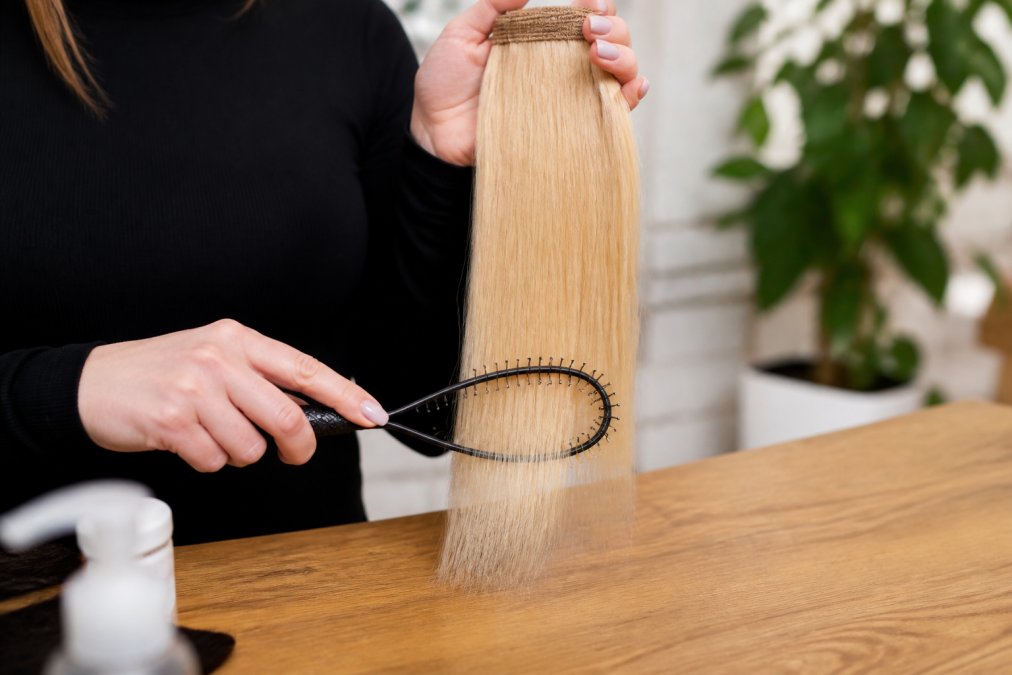
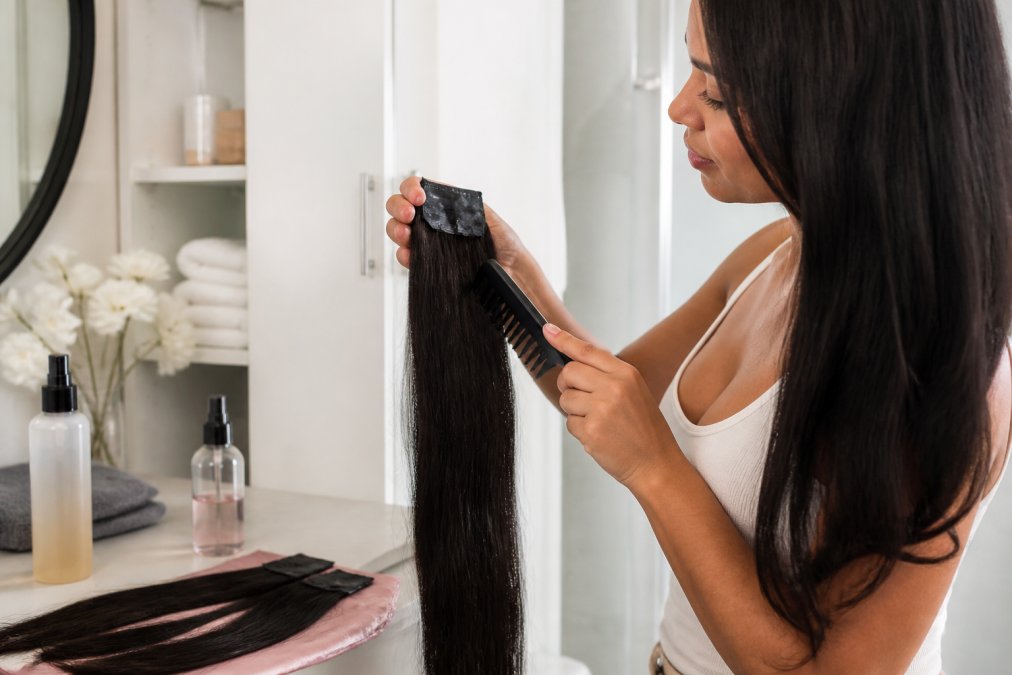
Avoid fine-tooth combs and paddle brushes. Start brushing from the ends upward in small sections, holding near the roots to minimize pull. Brush morning and evening to remove shed hairs before they knot into the weft.
Synthetic extensions need different handling. Use a detangling spray designed for synthetics before brushing to reduce friction and static.
How to Wash Hair Extensions Without Tangling
Washing technique depends on attachment method. Tape-in, sew-in, micro-link, and clip-in extensions have different vulnerabilities, and treating them identically accelerates matting.
Universal Washing Principles
Always use sulfate-free shampoo and lukewarm water. Hot water opens the cuticle and weakens adhesive bonds. Fill a basin with lukewarm water and sulfate-free shampoo, gently swish without scrubbing, then rinse with cool water. Never wring or twist; squeeze water out gently between your palms.
Attachment-Specific Washing Techniques
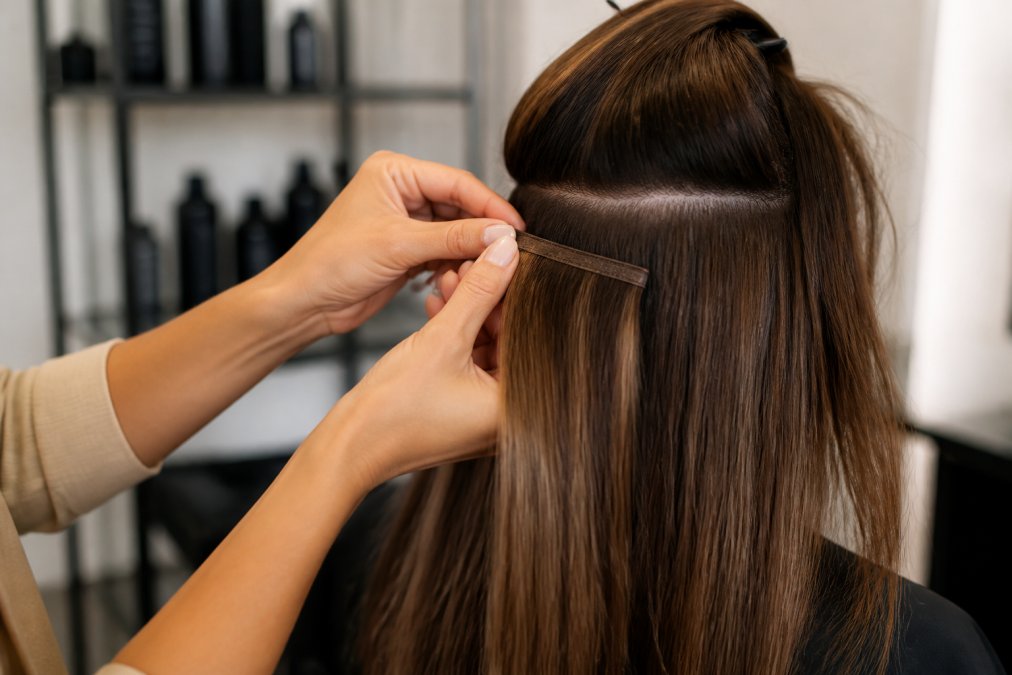
Tape-in Extensions: Wash by tilting your head back and pouring water over lengths and ends, avoiding tape bonds at roots. Do not submerge the root area. Gently squeeze water from mid-lengths and ends, pat dry with a microfiber towel, then air dry completely. Apply leave-in conditioner to mid-lengths and ends immediately after washing.
Sew-in Extensions: You can submerge sew-ins fully during washing. Gently swish in lukewarm water with sulfate-free shampoo, paying attention to the weft where shed hairs accumulate. Apply a deep conditioning treatment to the weft and mid-lengths for 5-10 minutes before rinsing to prevent matting.
Micro-link Extensions: Pour water over lengths and ends, tilting your head to avoid direct pressure on the beads. Do not scrub the root area. Apply a leave-in conditioner to mid-lengths and ends, then a lightweight serum to roots to prevent bead loosening.
Clip-in Extensions: Remove before washing your natural hair. Wash separately in lukewarm water with sulfate-free shampoo, gently swishing without agitation. Apply leave-in conditioner to mid-lengths and ends, then lay flat to air dry completely before reattaching.
Conditioning Strategy
Apply a leave-in conditioner to mid-lengths and ends immediately after washing, avoiding roots. For tape-in and micro-link extensions, use lightweight sprays that won't weaken adhesive bonds. For sew-in extensions, apply richer conditioner to the weft area. For clip-ins, standard leave-in conditioner works well.
Use a light mist of leave-in conditioner before brushing to add slip and reduce friction.
Drying and Post-Wash Care
Air dry whenever possible. If using heat, apply thermal protectant spray and keep temperature below 302°F. For tape-ins, ensure roots are completely dry before styling. For sew-ins, dry the weft thoroughly. For micro-links, avoid blow-drying directly on beads.
Sleeping with Hair Extensions to Prevent Matting
How you sleep determines whether extensions stay silky or wake up matted. Use a silk or satin pillowcase instead of cotton, which creates friction and pulls moisture from hair.
A silk bonnet or sleeping cap is even more effective. Braid your hair loosely before bed or put it in a low ponytail to reduce movement. Avoid tight braids that create tension at the roots.
Side sleepers experience more friction than back sleepers. If you sleep on your side, use a bonnet to minimize contact.
A loose braid positioned over your shoulder keeps hair contained and reduces tangling while you sleep.
Preventing Matting at the Nape of the Neck
The nape is ground zero for matting because it experiences constant friction from your neck, shoulders, and clothing. This area needs extra attention in your maintenance routine. Brush the nape thoroughly each morning and evening, always working from the ends upward. Hold the hair near the roots to prevent pulling.
Apply a leave-in conditioner or silicone-based serum to the nape area after brushing. This adds slip and prevents fibers from sticking together. Some stylists recommend a light oil treatment on this zone, but avoid heavy products that attract dirt and cause buildup.
When styling, avoid tight ponytails that create constant tension at the nape. Loose styles allow hair to move freely without matting. If you wear your hair up frequently, alternate between different styles to distribute pressure evenly.
Sleep positioning is especially important for the nape. A loose braid or bonnet keeps this area protected from friction. Some people find that sleeping with the braid positioned over their shoulder prevents nape matting more effectively than any other method.
Moisturizing and Heat Protection for Extension Longevity
Moisture is the foundation of tangle prevention, but not all moisturizing products are created equal, and some actively accelerate matting depending on your extension type. The key is understanding which ingredients work for human hair versus synthetic fibers, and which ones to avoid entirely.
Ingredient Deep-Dive: What to Avoid
Sulfates, parabens, and certain alcohols are the primary culprits behind accelerated matting. Sulfates (sodium lauryl sulfate and sodium laureth sulfate) strip natural oils and open the hair cuticle, leaving fibers dry and prone to friction. Parabens can build up on extension fibers over time, creating a waxy coating that traps moisture and causes matting at the roots. Denatured alcohols (listed as "alcohol denat" on labels) evaporate quickly and leave hair drier than before application.
For human hair extensions, avoid products containing these three ingredient classes entirely. Read labels carefully, many "extension-safe" products still contain one or more of these. Look instead for sulfate-free formulations with glycerin, panthenol, or amino acids, which hydrate without buildup.
For synthetic extensions, the stakes are higher. Synthetic fibers have no natural cuticle layer, so they cannot absorb moisture the way human hair does. Instead, they rely on surface conditioning. Silicone-based serums (dimethicone, cyclomethicone) are essential for synthetic extensions because they coat the fiber and reduce static electricity, but only if applied sparingly. Heavy silicone buildup causes matting faster than dryness does. Use a lightweight silicone serum designed specifically for synthetics, applied to mid-lengths and ends only, never at the roots.
Moisturizing Strategy by Extension Type
Human hair extensions benefit from leave-in conditioners with humectants (ingredients that draw moisture into the hair). Apply a leave-in conditioner daily, even on non-wash days, focusing on the mid-lengths and ends.
Heat Protection Without Damage
Your Daily Maintenance Routine to Keep Extensions Tangle-Free
A consistent routine prevents most tangling problems. Start each morning by brushing your extensions thoroughly with a loop brush or wide-tooth comb. Work from the ends upward in small sections, holding near the roots. This removes any shed hairs that accumulated overnight.
| Maintenance Task | Frequency | Time Required |
|---|---|---|
| Brush extensions | Daily (morning and evening) | 5-10 minutes |
| Apply leave-in conditioner | Daily | 2 minutes |
| Wash with sulfate-free shampoo | 1-2 times per week | 10 minutes |
| Deep conditioning treatment | Weekly | 15-20 minutes |
| Sleep with bonnet or braid | Every night | 2 minutes |
| Heat styling | 1-2 times per week | Varies |
Frequently Asked Questions
Why do my hair extensions always get tangled?
Hair extensions tangle due to friction, shedding, and lack of moisture. Unlike natural hair, extensions don't receive sebum (natural oils) from your scalp, making them drier and more prone to matting. Shed hairs can knot into the weft if not removed daily. Friction from sleeping, friction against clothing, and improper brushing also cause tangling. Using a loop brush with 4 mm tooth spacing, the optimal interval for detangling, removes shed hairs before they tangle and distributes leave-in products evenly.
How often should I brush my hair extensions to prevent tangling?
Daily brushing is the single most effective method for preventing tangling. Brush gently in sections, starting at the ends and working upward, using a loop brush or boar bristle brush designed for extensions. This removes shed hairs before they can knot into the weft and helps distribute natural oils or leave-in conditioner throughout the hair. Avoid brushing when extensions are wet, wait until they're completely dry to prevent damage and breakage.
What's the best way to sleep with hair extensions without waking up with tangles?
Sleep in a loose braid or use a silk or satin bonnet to reduce mechanical friction, which is a primary cause of tangling and breakage. Silk and satin create less friction than cotton pillowcases. If you prefer braiding, keep the braid loose to avoid root tension and stress on the attachment points. This overnight positioning technique prevents matting at the nape and occipital zones, areas most vulnerable to tangling during sleep.
Can I use regular shampoo on hair extensions?
No. Regular shampoos often contain sulfates and harsh chemicals that strip moisture from extensions and damage the cuticle alignment, leading to increased tangling and dryness. Use sulfate-free shampoo and conditioner formulated specifically for extensions. Wash in cool water, apply shampoo to the roots and mid-lengths (not the ends), and rinse thoroughly. Always use a leave-in conditioner after washing to restore moisture balance and reduce friction between fibers.