 how-to
Why Makeup With Skincare Benefits Works
Table of Contents
- Understanding Skincare-Makeup Hybrids and How They Function
- Active Ingredients in Makeup: What Actually Makes the Difference
- How to Choose Makeup for Your Skin Type to Maximize Benefits
- Skincare vs. Makeup Efficacy: What the Science Shows
- The Real Impact on Your Skin Barrier and Long-Term Health
- Layering, Application, and Avoiding Common Mistakes
- Cost-Per-Use Analysis: Is Multi-Tasking Makeup Worth It?
- Frequently Asked Questions
Last Updated: September 30, 2026
Understanding Skincare-Makeup Hybrids and How They Function
Makeup with skincare benefits is a product category that combines cosmetic coverage with active skincare ingredients designed to improve skin condition while you wear it. These hybrid formulas contain ingredients like hydrating compounds, antioxidants, and anti-inflammatory agents that work on your skin throughout the day, not just sit on the surface.
The concept isn't entirely new, but what's changed is the concentration and efficacy of the ingredients. According to University of Southern California research on beauty hybridization, the trend is driven by consumer demand for minimalism and the "skinification" of makeup products. Rather than carrying separate products, you get dual benefits in one application.
Here's what makes them different from traditional makeup: regular foundation or powder sits on your skin as a cosmetic layer. Hybrid products actively interact with your skin barrier, delivering hydration, soothing properties, or protective compounds while providing coverage. A 2026 consumer study of 213 women found a 58% improvement in complexion metrics when using no-rinse solutions designed to be worn under makeup, according to Bigeye Agency's skincare marketing analysis.
At Luscious Lips & Locks 4u by Michelle, we provide discerning clients with access to high-quality beauty essentials, including premium makeup with skincare benefits. Using both our makeup and skincare together doubles effectiveness, and it truly shows in the results you will see.
Active Ingredients in Makeup: What Actually Makes the Difference
The ingredients that matter most are the ones that penetrate or interact with your skin barrier, not just sit on top.
Hyaluronic acid holds up to 1,000 times its weight in water. When formulated into makeup, it draws moisture into your skin, plumping fine lines and improving hydration. Niacinamide reduces inflammation and strengthens your skin barrier. Ceramides lock in moisture and repair damaged barrier function. Peptides signal your skin to produce more collagen, which firms and smooths texture over time.
The Concentration Problem: When Skincare Claims Become Marketing
The real question isn't what ingredients are in the product, it's whether the concentration is high enough to produce measurable results.
A clinical serum typically contains 2-5% hyaluronic acid; hydrating makeup contains 0.5-1.5%. The serum visibly plumps skin within hours; makeup contributes to hydration over weeks of consistent use.
Niacinamide shows anti-inflammatory effects at 2-5% in clinical studies. Most makeup lists it but rarely discloses concentration. Below 1%, you get cosmetic benefit but not clinical anti-inflammatory effects.
A barrier-repair cream contains 3-5% ceramide complex; makeup contains less than 1%, enough for minor barrier support but not repair.
The benefit is cumulative and maintenance-focused, not corrective. Makeup with 0.5% hyaluronic acid worn daily delivers more total hydration than a serum used twice weekly. For severely damaged barriers, use higher-concentration treatment products first.
Key Ingredients That Deliver Results
| Ingredient | Typical Makeup Concentration | Clinical Efficacy Threshold | What You Actually Get in Makeup |
|---|---|---|---|
| Hyaluronic Acid | 0.5-1.5% | 2-5% for visible plumping | Hydration boost; fine line softening over weeks |
| Niacinamide | 0.5-2% | 2-5% for anti-inflammatory effect | Slight pore refinement; barrier support over time |
| Ceramides | 0.3-1% | 3-5% for barrier repair | Moisture lock-in; minor barrier strengthening |
| Peptides | 0.5-2% | 1-3% for collagen signaling | Subtle firming; texture improvement over months |
| Vitamin C | 0.5-1% | 10-20% for brightening (unstable in makeup) | Antioxidant protection; minimal brightening |
| Glycerin | 1-3% | 3-5% for humectant effect | Hydration; works well at lower concentrations |
Stabilized vitamin C serums contain 10-20% active ascorbic acid for visible brightening. Makeup with vitamin C contains 0.5-1%, offering antioxidant protection and prevention of dullness, not correction of existing discoloration.
Why Lower Concentrations Still Work in Makeup
Makeup's advantage is frequency and duration of contact. Worn 12-16 hours daily versus 8 hours for a serum, makeup delivers 360-480 hours of contact monthly versus 240 for serum. Lower concentration, longer exposure, equals cumulative benefit.
Research shows that K-beauty makeup products are naming skincare benefits in their titles three times as often as the broader market, according to YipitData's 2026 makeup trends analysis. This shift reflects real consumer demand, but it also reflects the reality that these products work differently than skincare, not faster, but more consistently.
How to Spot Real Efficacy vs. Marketing
When evaluating a makeup with skincare claims:
-
Check ingredient order. Active ingredients should appear in the top 10 on the ingredient list. If hyaluronic acid is listed 15th or lower, concentration is likely below 1%.
-
Look for concentration disclosure. Premium brands sometimes list percentages ("Contains 2% niacinamide"). If it's not disclosed, assume it's below the clinical threshold.
-
Evaluate the claim. "Hydrating" is realistic for any makeup with humectants. "Anti-inflammatory" requires niacinamide at 2%+. "Brightening" requires vitamin C at 10%+, which is rare in makeup. "Barrier-repairing" requires ceramides at 3%+.
-
Test on your skin. Clinical thresholds are averages. Some people see results at lower concentrations; others don't. Wear the product for 4 weeks before deciding if it works for you.
How to Choose Makeup for Your Skin Type to Maximize Benefits
The wrong formula can irritate your skin or sit heavy, negating the skincare benefits entirely. Your skin type determines which ingredients will help and which will cause problems.
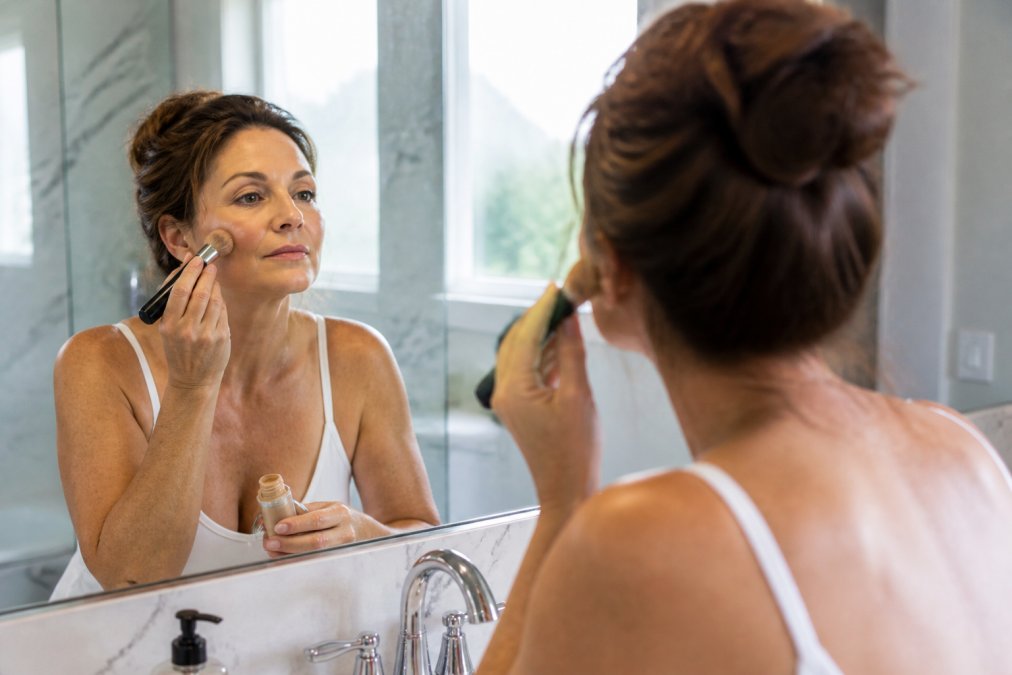
Dry skin needs hyaluronic acid, glycerin, and ceramides. Look for "moisturizing" or "hydrating" products; avoid alcohol high on the ingredient list.
Oily skin benefits from niacinamide for sebum regulation and lightweight, gel-based or water-based formulas. Antioxidants prevent congestion from oxidized sebum.
Sensitive skin requires fragrance-free formulas. Niacinamide and ceramides calm inflammation; peptides support barrier repair.
Mature skin needs peptides for collagen stimulation, antioxidants for protection, and hydrating ingredients to plump fine lines. A 2026 shift toward "longevity beauty" emphasizes products that maintain skin health over time rather than just cosmetic coverage, according to Forbes' analysis of longevity beauty trends.
Skincare vs. Makeup Efficacy: What the Science Shows
Makeup with skincare benefits is effective, but not a replacement for dedicated skincare. The limitation is concentration.
The Real Impact on Your Skin Barrier and Long-Term Health
Your skin barrier holds in moisture and keeps out irritants. Damage shows as dryness, sensitivity, redness, and accelerated aging. Hybrid makeup actively repairs and strengthens it.
Layering, Application, and Avoiding Common Mistakes
Application determines whether you get results or pilling. Layering active ingredients creates texture and adhesion problems traditional makeup doesn't have.
The Pilling Problem: Why Hybrid Makeup Breaks Down
Pilling happens when product layers don't bond. With hybrid makeup, it's more complex than traditional makeup.
Wait Times: The Overlooked Step
With hybrid products, wait times between layers are critical.
After moisturizer or serum: 2-3 minutes. Hydrating serums need time to absorb. Applying primer or foundation while wet causes pilling.
Product Amount: Less Is Actually More
A pea-sized amount of hydrating foundation covers the entire face. Most people use 3-4 times too much.
Overloading causes pilling, caking, breakdown, and clogged pores.
Texture Compatibility: The Hidden Rule
Understanding texture compatibility prevents most application problems.
Oil-based + water-based = separation. Use a water-based primer with any foundation, or match primer and foundation bases.
Removal: The Step That Determines Long-Term Results
Leaving makeup on overnight clogs pores, traps bacteria, and damages your barrier. Removal is as important as application.
Common Mistakes That Ruin Results
- Wait 2-3 minutes after moisturizer for hydrating products to absorb.
- Use a pea-sized amount for the entire face.
- Wait 30 seconds after primer; 1-2 minutes after foundation before powder.
- Match primer and foundation bases (oil-based or water-based).
- Skip powder or wait for foundation to set.
- Double cleanse every night.
- Give hybrid makeup 4 weeks of consistent use before evaluating efficacy.
- Adjust technique for longer wait times and lighter application.
Cost-Per-Use Analysis: Is Multi-Tasking Makeup Worth It?
Premium makeup with skincare benefits costs more upfront, but the math changes when you factor in what you're replacing.
Frequently Asked Questions
Does makeup with skincare ingredients actually work?
Yes. A 2026 consumer study of 213 women found that no-rinse solutions designed to be worn under makeup demonstrated a 58% boost in complexion improvement. The efficacy depends on ingredient concentration, formulation quality, and consistent use. However, while makeup with skincare benefits delivers measurable results, the overall impact is generally more limited compared to dedicated skincare products used separately.
What active ingredients in makeup should I look for?
Look for ingredients like hyaluronic acid for hydration, niacinamide for pore refinement and anti-inflammatory benefits, glycerin for moisture retention, vitamin C for antioxidant protection, and ceramides to support your skin barrier. Peptides can also help improve skin texture over time.
Can makeup with skincare benefits replace my daily skincare routine?
No. While makeup with active skincare ingredients provides supplemental benefits, it cannot replace a dedicated skincare routine. Think of it as layering: your base skincare addresses deeper skin health, and multi-tasking makeup adds an extra layer of hydration, antioxidants, and soothing agents throughout the day. Using both together delivers compounded benefits rather than one replacing the other.
How do I choose makeup for my skin type to get the most benefit?
Match formulation to your skin's needs: for example, dry or mature skin often benefits from hydrating ingredients like hyaluronic acid, glycerin, and ceramides. Sensitive skin generally requires gentle, soothing options. Always patch-test first, and consider layering with a hydrating primer to prevent pilling and ensure the product sits properly on your skin barrier.