 listicle
Best Hair Extensions for Fine Aging Hair
Table of Contents
- Best Hair Extensions for Fine Aging Hair: A 2026 Comparison
- Tape-In Extensions: The Top Choice for Weight Distribution
- Clip-In Extensions for Temporary Volume Without Damage
- Keratin Bond Extensions for Long-Term Wear
- Best Hair Extension Methods for Fine Hair: Hand-Tied and I-Tip Options
- Maintaining Hair Extensions for Mature Hair: Scalp Health and Care Routines
- Luxury Hair Extensions for Volume: What to Prioritize
- How to Prevent Damage and Traction Alopecia
- Frequently Asked Questions
Last Updated: October 4, 2026
Best Hair Extensions for Fine Aging Hair: A 2026 Comparison
Finding the best hair extensions for fine aging hair requires designs that prioritize lightweight application and scalp protection. At Luscious Lips & Locks 4u by Michelle, we understand that premium quality hair extensions should enhance your natural beauty without compromising the health of your roots.
The global human hair extension market reached USD 5.90 billion in 2026, reflecting growing demand for solutions that address thinning and aging hair. Yet most women struggle to find extensions that won't slip, mat, or create tension on fragile strands. This guide covers the most effective methods for fine aging hair, from tape-in systems to micro-bonds, with honest assessments of what actually works.
Quick Comparison Table
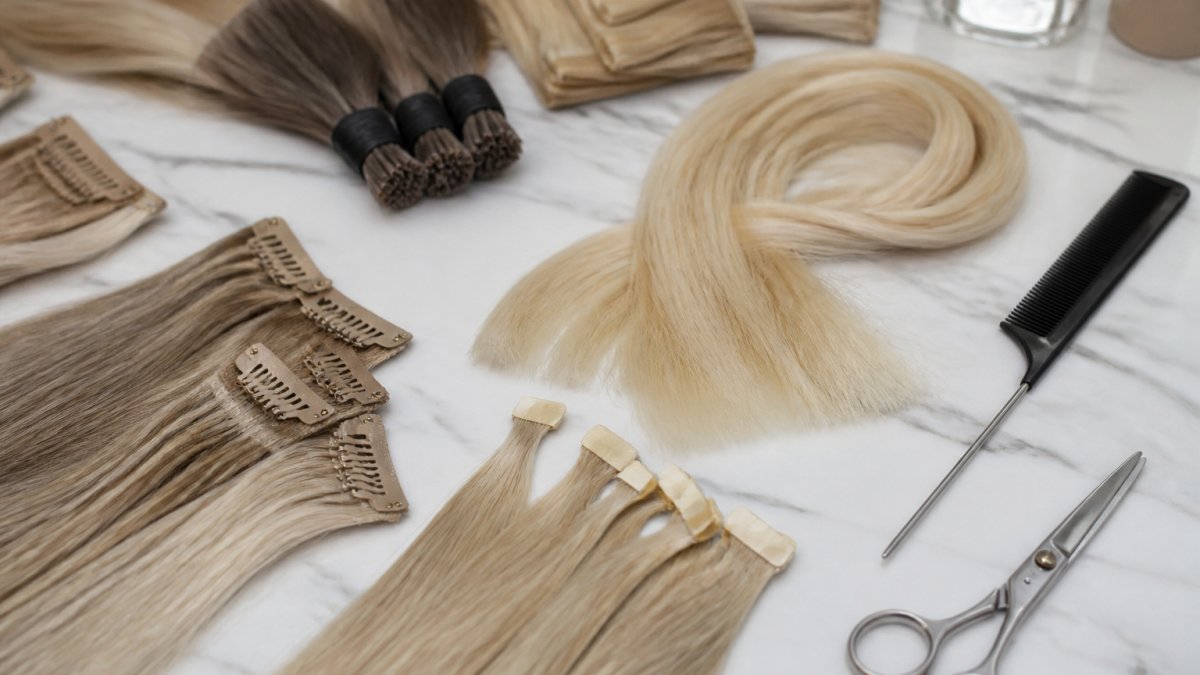
| Extension Type | Best For | Application | Maintenance |
|---|---|---|---|
| Tape-In | Weight distribution across fine hair | Professional application | Reposition every 6-8 weeks |
| Clip-In | Temporary volume without commitment | Self-application in minutes | Daily removal recommended |
| Keratin Bond | Long-term wear in specific areas | Professional application | Professional removal required |
| Hand-Tied Weft | Seamless blending with natural texture | Professional sewing method | Maintenance every 4-6 weeks |
| I-Tip (Micro-Links) | Fine hair sensitive to heat or glue | Professional application | Adjust as natural hair grows |
Tape-In Extensions: The Top Choice for Weight Distribution
Tape-in extensions remain the safest option for fine and thinning hair because they distribute weight across a wider section of natural hair compared to other methods. According to Community Style House's 2026 guide, tape-ins are identified as one of the gentlest systems for fragile strands.
Tape-in extensions use medical-grade adhesive tape with a lightweight weft design that spreads weight horizontally rather than concentrating it on individual strands, crucial for mature hair experiencing follicle miniaturization. Most stylists can apply a full head in under two hours.
What works: Flat profile sits flush against the scalp, virtually invisible. Reusable hair can be repositioned every 6-8 weeks, extending lifespan. Prevents scalp tension that triggers traction alopecia.
What doesn't: Requires professional maintenance every 6-8 weeks. Adhesive tape requires careful removal. May irritate sensitive scalps.
Clip-In Extensions for Temporary Volume Without Damage
Clip-in extensions offer the fastest, most reversible solution for adding volume to fine aging hair, with zero long-term tension on roots.
Seamless clip-ins feature a thin, silicone-based weft that lays flatter than traditional designs. 100% Remy human hair blends naturally and prevents visible seams in fine hair.
What works: Zero commitment, daily removal prevents tension, thin weft engineered for fine hair.
What doesn't: Requires daily application and removal; temporary by design.
Keratin Bond Extensions for Long-Term Wear
Keratin bonds mimic human hair's molecular structure, creating a natural fusion. Individual strand-by-strand application allows strategic placement in thinning areas like the crown or temples, ideal for age-related hair loss in specific zones.
What works: Gentler than glue-based methods, 360-degree rotation, 3-4 month durability, customizable bond sizes.
What doesn't: Requires professional application and removal. If applied too densely, can create scalp tension. DIY removal risks breaking natural hair.
Best Hair Extension Methods for Fine Hair: Hand-Tied and I-Tip Options
Hand-tied wefts are sewn onto a beaded foundation, allowing customizable placement for thinning patterns. I-Tip extensions use silicone-lined beads without heat or glue, ideal for fine hair sensitive to adhesives.
Hand-Tied Wefts:
- Very discreet and comfortable for daily wear
- Allow natural hair growth without tension
- Require maintenance every 4-6 weeks
- Higher initial cost but long-lasting
I-Tip Extensions:
- No chemical damage to the hair shaft
- Easy to adjust as your natural hair grows
- Can be heavy if too many strands are applied at once
- Require professional application and adjustment
Both methods excel at blending seamlessly with natural hair texture, making them ideal for mature women who want invisible volume enhancement.
Maintaining Hair Extensions for Mature Hair: Scalp Health and Care Routines
Scalp health in aging hair differs fundamentally from younger scalps. Sebaceous glands produce less oil, follicles miniaturize, and the scalp's barrier function weakens.
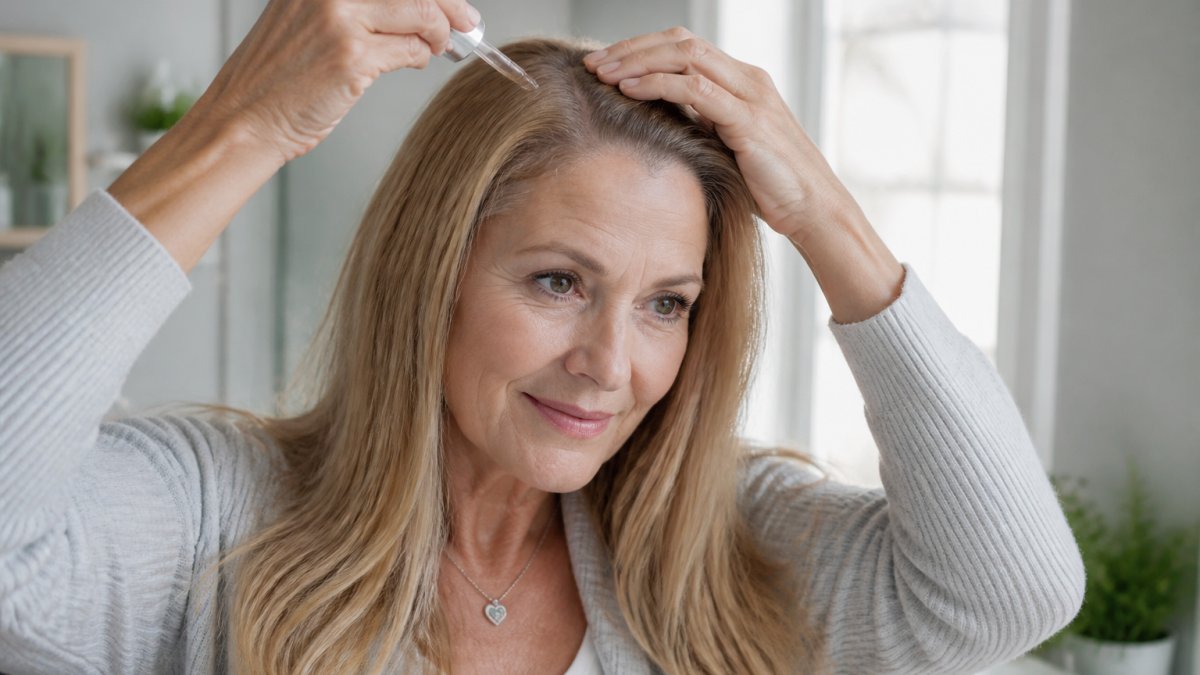
The aging scalp: What changes with time
By your 40s and 50s, sebum production drops 20-30%, leaving scalps drier and more prone to irritation. Follicle miniaturization means each strand becomes finer and more fragile.
Scalp-specific care for extension wearers
Wash extensions every 7-10 days with sulfate-free shampoo and lukewarm water. Condition from mid-length downward, avoiding roots where bonds attach. Weekly deep conditioning with hydrating masks restores moisture lost to reduced sebum production.
Scalp massage and circulation stimulation
Gentle scalp massage 2-3 times weekly stimulates blood flow, distributes natural oils, and reduces itching. Use fingertips in small circular motions for 5-10 minutes, avoiding bonds or clips.
Managing adhesive and tape sensitivity
Aging scalp skin becomes more reactive to adhesives. Watch for redness, itching, or bumps within 24-48 hours. If sensitive, ask your stylist about hypoallergenic tape, request smaller sections (2-3 inches), or apply a protective barrier.
For keratin bond or I-tip extensions, sensitivity is less common, but if you develop itching or bumps, the issue may be tension rather than adhesive.
Recognizing and responding to scalp distress
Warning signs of extension damage include itching, bumps, redness, flaking, hair breakage near attachment points, and tension headaches.
Professional maintenance as scalp protection
Maintenance appointments protect your scalp. Tape-in extensions require repositioning every 6-8 weeks; longer intervals concentrate tension on fragile new growth. Hand-tied and keratin bonds need adjustment every 4-6 weeks.
Sleeping and daily habits that protect your aging scalp
Sleep on silk or satin pillowcases to reduce friction and pressure points. Avoid tight hairstyles that pull extensions and natural hair simultaneously.
Luxury Hair Extensions for Volume: What to Prioritize
When investing in premium extensions for fine aging hair, prioritize material quality, customization, and the weight-to-strand ratio that determines whether extensions enhance or damage your hair.
Real human hair vs. synthetic: Why material matters for fine hair
Remy human hair (with aligned cuticles) maintains natural shine and doesn't tangle like lower-grade hair. Synthetic hair is heavier and stiffer, feeling unnatural on fine hair. When shopping, verify 100% human hair (not synthetic blends).
The weight-to-strand ratio: The calculation that prevents breakage
The weight-to-strand ratio, total extension weight divided by attachment points, determines whether extensions damage fine hair. Calculate by: (1) determining total weight in grams, (2) counting attachment points, (3) dividing weight by points.
Asking the right questions before purchasing
Ask your stylist: (1) total weight of extensions, (2) number of attachment points, (3) weight per attachment point, (4) how many natural strands each point supports, (5) whether placement will avoid thinning areas.
Customization over one-size-fits-all
Luxury extensions are defined by customization. Your stylist should assess hair density, thinning patterns, and scalp sensitivity before recommending a method. For example, use lighter extensions at the crown and more at the nape, with smaller bonds in sensitive areas.
Quality indicators beyond brand name
When evaluating luxury extensions, look for:
- Hair that feels soft and moves smoothly. Run your fingers through a sample. Quality Remy hair should feel like your own hair, not stiff or plasticky.
- Minimal shedding. A few strands in a bundle is normal; significant shedding indicates lower-grade hair or poor processing.
- Consistent color and texture throughout the bundle. Variations suggest mixed-quality hair or blending with synthetic fibers.
- Clear information about origin and processing. Reputable brands disclose whether hair is virgin (unprocessed) or processed, and where it's sourced.
- Realistic pricing. Premium Remy hair extensions are an investment. If a "luxury" brand is significantly cheaper, the hair quality is likely compromised.
The reusability factor
Tape-in extensions can be reused 3-5 times if the tape is carefully removed and replaced. This means your initial investment in quality hair pays dividends over 12-18 months.
Factor reusability into cost: a quality tape-in bundle lasting 18 months offers long-term value; a lower-quality bundle lasting 6 weeks may cost more in the long run.
How to Prevent Damage and Traction Alopecia
Traction alopecia, hair loss caused by prolonged tension on hair roots, is the primary risk with extensions on fine aging hair. Prevention requires understanding how tension accumulates and choosing application methods that minimize it.
According to Ergun Tercan Salon's 2026 guidance, hair extensions can be safe for fine or thinning hair when the method and placement are customized to the individual, with newer systems focusing on reducing tension on the natural hair follicle.
Avoid: applying extensions too close to scalp, concentrating weight in one area, exceeding recommended wear time (8 weeks for tape-in, 4 months for keratin bonds), sleeping in clip-ins, or tight hairstyles. Signs of damage include itching, bumps, breakage, and thinning. Remove immediately if these appear. The safest approach: clip-ins 4-5 days weekly, removed nightly, or tape-in/hand-tied extensions repositioned every 6-8 weeks.
Fine aging hair deserves extensions designed for its unique needs, not generic systems built for thicker, younger hair. Tape-in extensions offer the best weight distribution for most women. Clip-ins provide a low-risk option for temporary volume. Keratin bonds and I-tips work well for targeted placement in thinning areas. Whichever method you choose, prioritize customized application, regular maintenance, and scalp health above all else. At Luscious Lips & Locks 4u by Michelle, we provide luxury quality hair extensions that are silky soft and tangle-free, backed by a 100% satisfaction guarantee.
Frequently Asked Questions
Can thin, fine hair actually handle hair extensions without damage?
Yes, when the method and placement are customized to your hair density. Tape-in extensions are identified as one of the safest options for fine and thinning hair because they distribute weight across a wider section of natural hair compared to other methods. The key is choosing lightweight construction and ensuring your stylist understands hair density mapping, placing extensions only where your natural hair can support them without creating traction alopecia or follicle miniaturization.
What's the newest hair extension method for fine aging hair in 2026?
Tape-in and hand-tied weft methods are increasingly designed with lightweight weft construction and customizable placement. Industry guidance for 2026 emphasizes systems that reduce tension on the natural hair follicle, moving away from one-size-fits-all approaches toward methods tailored to individual scalp sensitivity and hair regrowth patterns.
How do I maintain hair extensions on aging, delicate hair?
Maintaining hair extensions for mature hair requires weekly scalp care, heat-free styling, and monthly professional maintenance. Use sulfate-free shampoo and condition only the extension hair, never the roots. Sleep on a silk pillowcase to reduce friction and breakage. Avoid tight hairstyles that create scalp tension. Have your stylist check for signs of traction alopecia at each appointment. If your natural hair shows follicle miniaturization or excessive shedding, reduce wear time or switch to clip-ins that you remove nightly to give your scalp recovery periods.
Are halo extensions safe for fine aging hair?
Halo extensions can work for fine aging hair as a temporary solution because they sit on top of the head rather than being attached to individual strands. However, they are not typically recommended for long-term wear on fragile hair. The weight of the halo band can create scalp tension over time, potentially triggering traction alopecia. Tape-in or clip-in alternatives are safer choices for daily or frequent wear on mature, low-density hair.