 listicle
Best Anti-Aging Makeup for Mature Skin
Table of Contents
- Best Anti-Aging Makeup Products for Mature Skin
- Best Foundation for Mature Skin: What to Look For
- How to Apply Makeup to Mature Skin: Technique Matters
- Dewy Makeup for Mature Skin: Achieving That Radiant Finish
- Anti-Aging Makeup for Mature Skin Over 70
- Common Mistakes to Avoid When Applying Makeup to Mature Skin
- Frequently Asked Questions
Last Updated: October 11, 2026
Best Anti-Aging Makeup Products for Mature Skin
At Luscious Lips & Locks 4u by Michelle, we understand that anti aging makeup for mature skin isn't about hiding, it's about enhancing what's already there while addressing specific concerns like fine lines, texture, and dryness.
The difference between standard makeup and anti-aging makeup for mature skin comes down to ingredients and formulation. Products marketed for mature skin increasingly combine makeup with skincare-oriented features such as hydration and SPF. According to The New York Times Wirecutter's testing of makeup for mature skin, selecting the right products makes a measurable difference in how makeup wears throughout the day and how your skin looks by evening.
Foundations That Hydrate and Smooth
For mature skin, a hydrating foundation prevents makeup from settling into fine lines and keeps your complexion looking fresh rather than powdery.
Primers and Skin Preparation
A hydrating primer creates a smooth base, extends wear time, and prevents makeup from clinging to dry patches.
Apply nourishing moisturizer to damp skin at night to lock in hydration. In the morning, use a lightweight hydrating primer to create a smooth canvas and prevent foundation from looking patchy.
| Primer Type | Best For | Key Benefit |
|---|---|---|
| Hydrating gel primers | Dry, mature skin | Adds moisture before makeup |
| Silicone-based primers | Texture and pores | Smooths fine lines visually |
| Color-correcting primers | Redness or discoloration | Neutralizes before foundation |
Best Foundation for Mature Skin: What to Look For
Choosing the right foundation depends on your skin type, undertone, and specific concerns.
Look for foundations labeled hydrating, luminous, or care-focused. Avoid matte or ultra-matte finishes, which can emphasize dryness and fine lines. A dewy or satin finish reflects light in a way that flatters mature skin and creates the illusion of plumpness.
Look for hydrating ingredients like hyaluronic acid, glycerin, or jojoba oil, these prevent settling into lines and feel more comfortable on mature skin.
Test your shade in natural light every few years; mature skin often develops subtle undertone shifts.
Test how foundation performs over 8-10 hours: does it separate, cake, or migrate into fine lines? Real-world performance matters more than first-hour appearance.
How to Apply Makeup to Mature Skin: Technique Matters
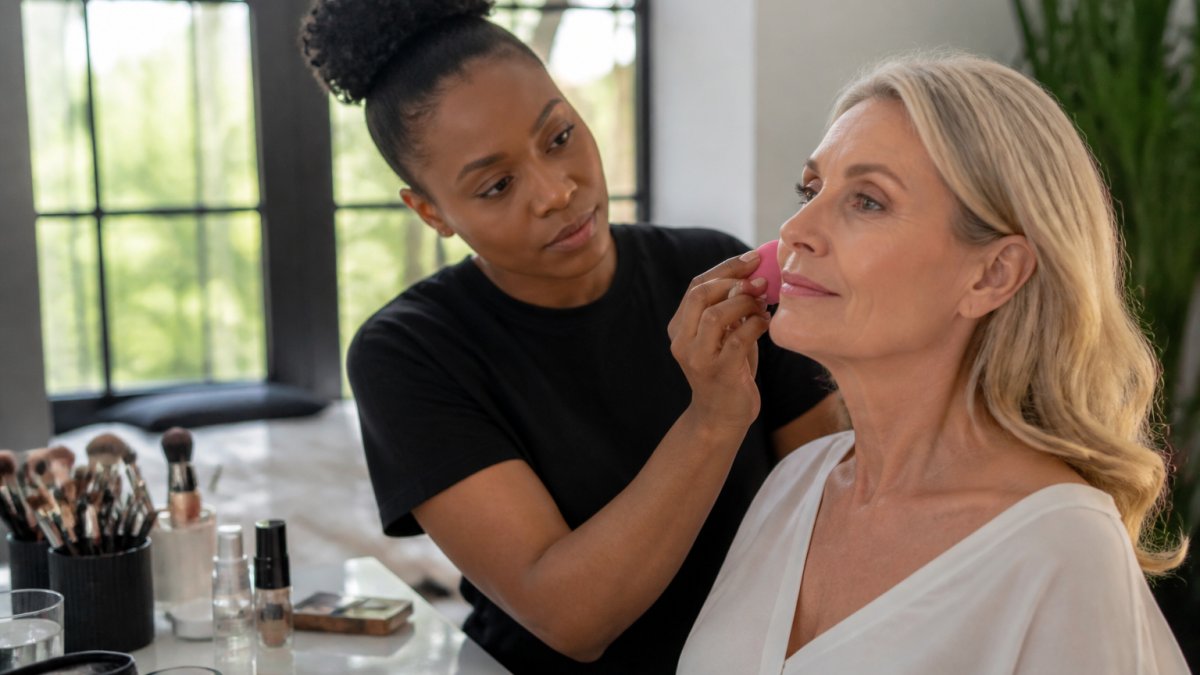
Application technique is where anti aging makeup for mature skin truly shines. The right technique prevents makeup from settling into lines and creates a polished, youthful finish. Different zones require different approaches: the under-eye area is delicate and prone to creasing, the mouth area has fine lines that trap product, and textured zones need careful blending to avoid looking cakey.
Foundation Application: General Approach
Use a damp beauty sponge rather than a brush, it bounces product into skin rather than dragging across texture. Dampen with setting spray or rose water to blend seamlessly and prevent a heavy appearance.
Apply foundation in thin layers, building coverage where needed rather than everywhere. Start with a pea-sized amount and blend outward from the center of the face.
Under-Eye Application: Preventing Creasing and Settling
The under-eye area is delicate and shows mistakes immediately. Press (don't swipe) foundation gently with your sponge, using less product than elsewhere to prevent creasing.
Apply hydrating, full-coverage concealer one shade lighter than your skin tone in an inverted triangle under the eye. Use your ring finger to press gently, blending outward without swiping; the warmth helps it meld with skin.
Skip powder under the eyes if possible to prevent creasing. If you must powder, use a fluffy brush with a pressing motion and the absolute minimum amount.
Around the Mouth: Preventing Feathering and Settling
Apply hydrating lip balm before lipstick to prevent drying and feathering into fine lines.
Use a lip liner matching your natural tone to prevent feathering. Line the outer edge following your natural lip shape; avoid over-lining.
Apply lipstick with a brush for precision and thin, even coverage. Cream, satin, or luminous finishes are more flattering than matte on mature lips.
Textured Zones (Nose, Forehead, Chin): Blending Without Buildup
Apply foundation to textured areas using a pressing motion with your damp sponge, not swiping, to avoid buildup.
If foundation clings to texture, use a clean, damp sponge to blend and smooth, don't add more product.
Apply foundation to the nose in thin layers and blend carefully. Skip powder here or use only a tiny amount to prevent separation.
Cheekbones and Jawline: Creating Definition Without Harshness
Apply foundation to cheekbones and jawline with a damp sponge, blending upward toward temples and down the neck slightly to avoid harsh lines.
Apply cream blush to the apples of your cheeks and blend upward toward temples. Cream looks more natural than powder on mature skin. Choose warm shades, coral, peach, or warm rose, and apply less than you think you need.
Apply warm, matte bronzer to cheek hollows with a light hand, blending thoroughly to look like a natural shadow, not a stripe.
Setting Without Emphasizing Fine Lines
Avoid heavy powder; it accumulates in fine lines. Use a setting spray instead, which locks makeup without drying effects.
If you do use powder, apply only to areas that need it: the T-zone or any areas prone to oiliness. Skip the cheeks, under-eyes, and mouth entirely. Use a translucent powder and apply with a pressing motion, not a sweeping one. A little goes a very long way on mature skin.
Blending and Buffing for a Seamless Finish
After applying all products, use a clean, damp beauty sponge to gently blend and buff the entire face. This final step ensures no harsh lines, no product buildup, and a seamless, natural finish. Pay special attention to the jawline, temples, and areas where different products meet. A final buff with a damp sponge is the difference between makeup that looks applied and makeup that looks like your skin.
The key to successful makeup application on mature skin is using less product, applying in thin layers, and blending thoroughly. Technique matters more than product quantity; the most expensive foundation applied poorly will look worse than a drugstore foundation applied with care and precision.
Dewy Makeup for Mature Skin: Achieving That Radiant Finish
A dewy finish is the most flattering look for mature skin. Dewy makeup catches light and creates dimension, making skin look plump and healthy rather than flat or tired.
To achieve a dewy finish, skip matte products entirely. Choose hydrating foundations, luminous concealers, and cream blushes over powder versions. Cream products sit on top of the skin and reflect light, while powders sit in the skin and can emphasize texture.
Layer a hydrating concealer under the eyes, blending gently with your finger. The warmth of your finger helps the concealer meld with skin without disturbing foundation. A slightly dewy concealer in this area brightens the eye and minimizes the appearance of fine lines.
Add cream blush to the apples of your cheeks and blend upward toward the temples. Cream blush looks more natural on mature skin than powder and won't settle into texture. Choose warm, flattering shades, coral, peach, or warm rose, that complement your undertone.
A touch of liquid or cream highlighter on the high points of your face (cheekbones, brow bone, inner corner of the eye) amplifies the dewy effect. Apply sparingly, a little goes a long way. The goal is a subtle glow, not shine.
Anti-Aging Makeup for Mature Skin Over 70
Anti-aging makeup for mature skin over 70 follows the same principles as makeup for those in their 50s and 60s, but with added emphasis on comfort and wearability. Skin at this stage often requires more hydration and gentler handling.
Choose foundations specifically formulated for mature skin.
Concealer becomes even more important. A hydrating, full-coverage concealer under the eyes brightens the face and makes the entire complexion look fresher. Apply with a light hand, mature skin shows heavy concealer application immediately.
Skip eyeshadow if it feels uncomfortable or tends to crease. A swipe of cream blush on the eyelid adds color and dimension without the maintenance of traditional eyeshadow. Alternatively, a neutral eyeshadow in a cream or liquid formula works better than powder on mature eyelids.
Lipstick application matters. A lip liner prevents color from feathering into fine lines around the mouth. Choose hydrating formulas and apply a balm underneath to prevent drying. Matte lipstick can emphasize texture on mature lips, cream, satin, or luminous finishes are more flattering.
Common Mistakes to Avoid When Applying Makeup to Mature Skin
Even with the right products, common application mistakes can undermine your look. Awareness of these pitfalls helps you avoid them.
Heavy Foundation Application, The most common mistake. More product doesn't equal better coverage. It actually emphasizes texture and settles into fine lines. Use less and build gradually.
Powder Buildup, Setting powder is tempting, but it accumulates in fine lines and makes mature skin look cakey. If you must powder, use a light hand on the T-zone only. Consider a setting spray instead.
Neglecting Skin Prep, Skipping moisturizer or primer shows immediately on mature skin. These steps are non-negotiable. They create a smooth base and extend wear time significantly.
Wrong Undertone, Wearing the same shade you've worn for years without checking current match. Skin changes. Test your shade in natural light every few years and adjust as needed.
Matte Everything, Matte foundation, matte powder, matte blush, matte lipstick. This combination drains mature skin of radiance. Choose at least some luminous or dewy products to keep your complexion looking fresh.
Ignoring Texture, Fine lines and texture become more visible without proper hydration. A hydrating primer and foundation are essential, not optional. Skip these steps and makeup will emphasize every line.
Choosing the right anti-aging makeup for mature skin transforms how you look and feel. The products you select matter, but technique and skin preparation matter equally. Start with a hydrating foundation, apply with a damp sponge, and finish with dewy products rather than matte ones. This approach flatters mature skin and creates a polished, youthful appearance that lasts all day.
For a complete transformation, explore Luscious Lips & Locks 4u by Michelle's premium makeup and skincare collections. Our luxury quality products are meticulously curated for those who demand the very best. With our 100% satisfaction guarantee, you can invest in anti-aging makeup for mature skin with confidence, knowing that every product enhances your natural radiance and delivers the sophisticated beauty routine you deserve.
Frequently Asked Questions
What is the best foundation for mature skin?
Look for hydrating foundations with ingredients like hyaluronic acid and glycerin that prevent settling into fine lines. The best foundation for mature skin prioritizes glow over matte finishes and adapts to your skin's natural contours.
How should you apply makeup to mature skin?
Start with a hydrating primer to create a smooth base and lock in moisture. Apply foundation with a damp beauty sponge using gentle pressing motions rather than rubbing, which prevents product from settling into fine lines and wrinkles. Blend upward and outward from the center of the face. Use a light hand with powder, apply only where needed to set makeup without creating buildup. Avoid heavy application on the eye area and around the mouth, where texture shows most. Layer concealer after foundation for better blending and a more natural finish.
What makeup helps mature skin look dewy?
Choose hydrating formulas with moisturizing ingredients like jojoba oil and vitamin C. Apply a luminizing primer before foundation to amplify glow. Use cream-based blush and bronzer, which blend seamlessly and don't settle into texture. Finish with a hydrating setting spray instead of powder, or use powder only on the T-zone. The key is selecting products designed to enhance your skin's natural moisture and light reflection.
Is anti-aging makeup really effective, or is it just marketing?
Anti-aging makeup works through hydration, coverage, and light-reflecting ingredients, not by permanently changing skin. Hydrating formulas prevent makeup from settling into fine lines and wrinkles, making them less visible. Products with SPF offer sun protection, which prevents future damage. However, makeup alone won't transform your skin. The most effective approach combines quality makeup with a consistent skincare routine that includes moisturizer and sun protection. Many premium makeup brands now blend skincare benefits into their formulas, amplifying results when used together.